Strengthening Society, a Gala at a Time
Tony Judt died in 2010. He was one of my intellectual heroes, and his book Postwar is probably the best history book I have ever read. He also used to write for the New York Review of Books. A selection of his more autobiographical articles, published there, appeared after his death in The Memory Chalet, a book really worth reading. I am bad with adjectives, but that little book is interesting, human, funny, delightful, and more.
Besides being a historian, Tony Judt was highly political. A lecture on What Is Living and What Is Dead in Social Democracy, which he gave shortly before dying, is long but really worth listening to. Although Tony Judt was very close to death, and although the lecture is about “a serious topic,” there is a surprising amount of humor in it.
There is a bunch of other historians whom I admire not only because of the books they write but also because they know how to talk and express themselves. Whenever they speak, they invariably have interesting things to say, especially about politics. A few examples are Anne Applebaum, Timothy Garton Ash, Christopher Clark, Fiona Hill, Timothy Snyder, and Adam Tooze. None of them is French. Indeed, the most obvious French candidates—Bernard-Henri Lévy and Emmanuel Todd—are just unbearable, boring, and, once you have listened to them, totally predictable.
If you want to listen to a funny French historian, take Bruno Dumézil, but then you must be into the Merovingians and such. Maybe because of the nature of his specialty, this guy seems less into commenting on current events. If the Merovingians are your thing, another really amusing historian is Ronald Hutton, who is—and looks like—a leading paganist.
Anyways, of all those names, the one that stands out for me is Timothy Snyder. He first came onto my radar as a coauthor of Tony Judt’s, but it was with the war in Ukraine that I started clicking on any link with his name attached. If you have about 20 hours to spare—it is not impossible: the flu or a broken leg might help—and if you are minimally interested in history, then the class he gave at Yale about The History of Ukraine is really worth listening to. Not only does he discuss Ukraine, but he also touches, more by allusion than anything else, on history and the study of history.
Probably because it was his nature, and probably because of what has happened in Eastern Europe—and more recently in the US—Timothy Snyder is now clearly political. I have not yet read his latest book, On Freedom, but I am definitely going to look for it when I go to Dublin in a couple of weeks. If not then, perhaps during my short summer London blitz to see the archer and the two others. Just because I mentioned getting a book, another one I want to buy there is Solvej Balle’s On the Calculation of Volume IV, which, only because I have been working a lot, I have not read yet.
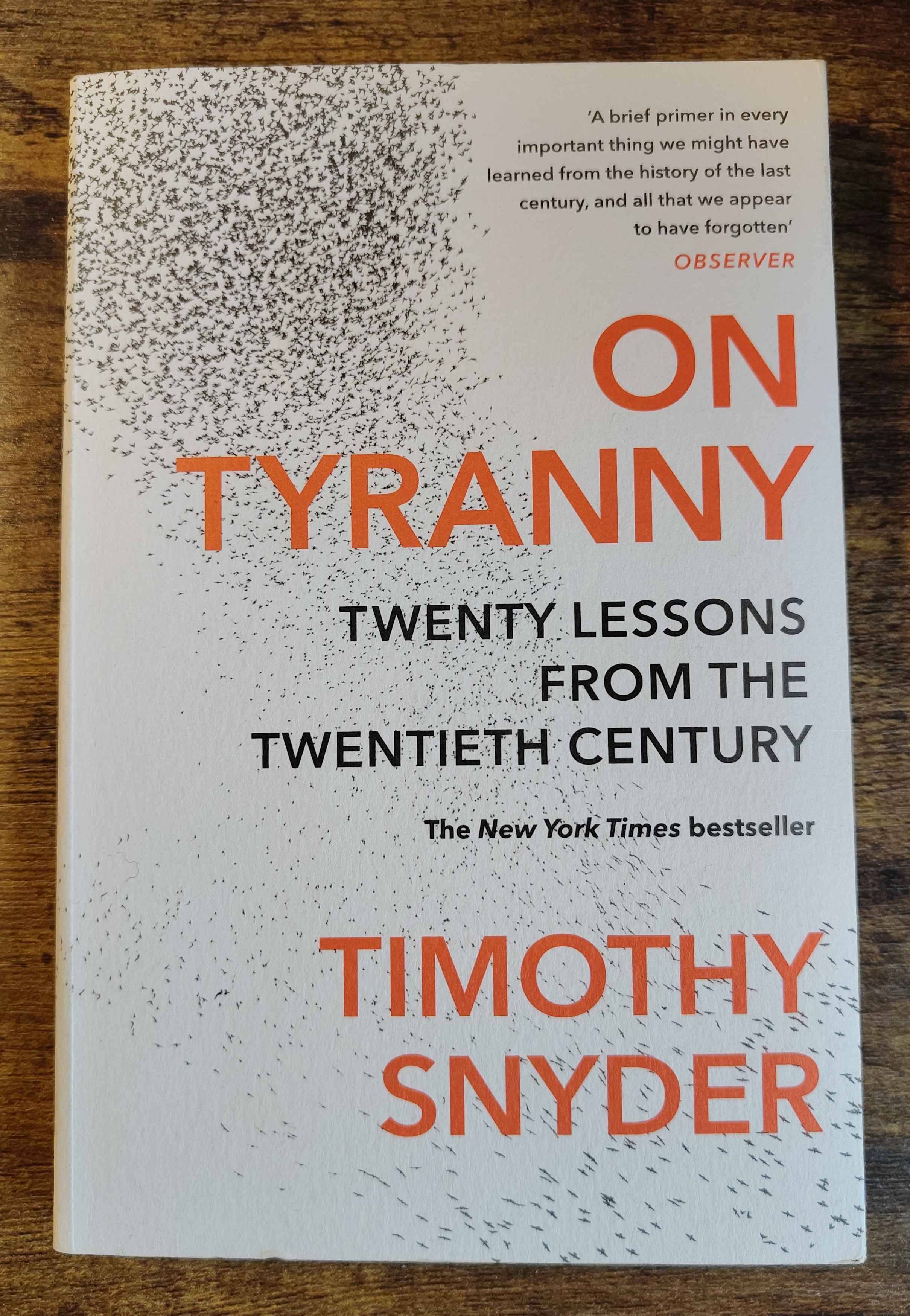
Timothy Snyder’s previous book, On Tyranny, has influenced how I think about what is going on in society and politics right now. The book feels maybe a bit too much like a call to arms, but what stays with me is his call to strengthen what he calls civil society. Although he might not say it explicitly—it has been a while since I read that book—it seems to me that he is mostly coming from the idea that autocrats, or wannabe autocrats, rely on inculcating a feeling of inevitability in people. This is done by alienating them, by making them feel separated from everybody else. What he suggests to strengthen civil society is to connect with the people around oneself, participate in life, do “good things,” and care for them, and get engaged. Not everybody is a hero, but everybody can do these things.
I am not sure what Timothy Snyder would say, but I would argue that doing things I normally do—like going to chat with the florist, the undertaker, and the other pub regulars—is a way of connecting with society. Walking around my neighborhood picking up trash is a way of getting closer to my neighbors. In a different way, going vegetarian and minimizing flying—I am going to Dublin by boat, but pleasure is also a reason for that—and making it clear that this is because of climate change also feels like putting in my little bit to strengthen civil society. Also, since a lot of my life takes place online, I feel that it should be in Timothy Snyder’s sense that I spend a bunch of hours writing this blog, putting in the open what I cook, or preaching about degoogling. For what it is worth, I try not to keep totally private to myself. But we agree that this is not much, that other people do vastly more, and this leads us to the title of this post: the gala.
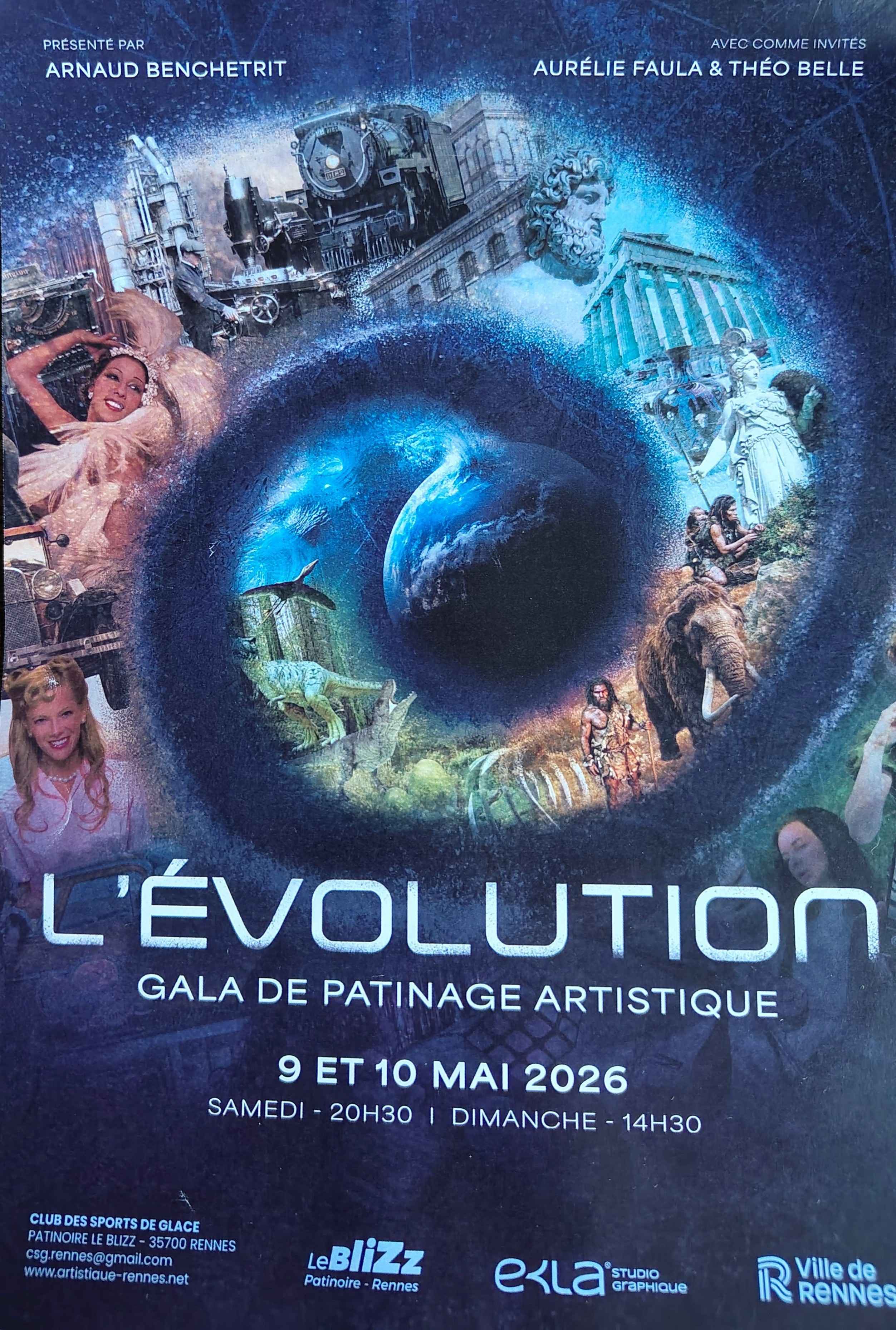
In my daughter’s skating club, they organize two galas each year. There is one in December, where they sell tickets to companies that I guess want to create team spirit by getting their workers a glass of champagne while they watch the better skating kids do crazy things on the ice. But, if you allow me, this is a fake gala. The real deal is the gala in May, when all the kids in the club—an army of 250–300—participate. I guess that, in a first approximation, one could compare it to an end-of-school-year event, but if it is such an event, then it is on steroids.
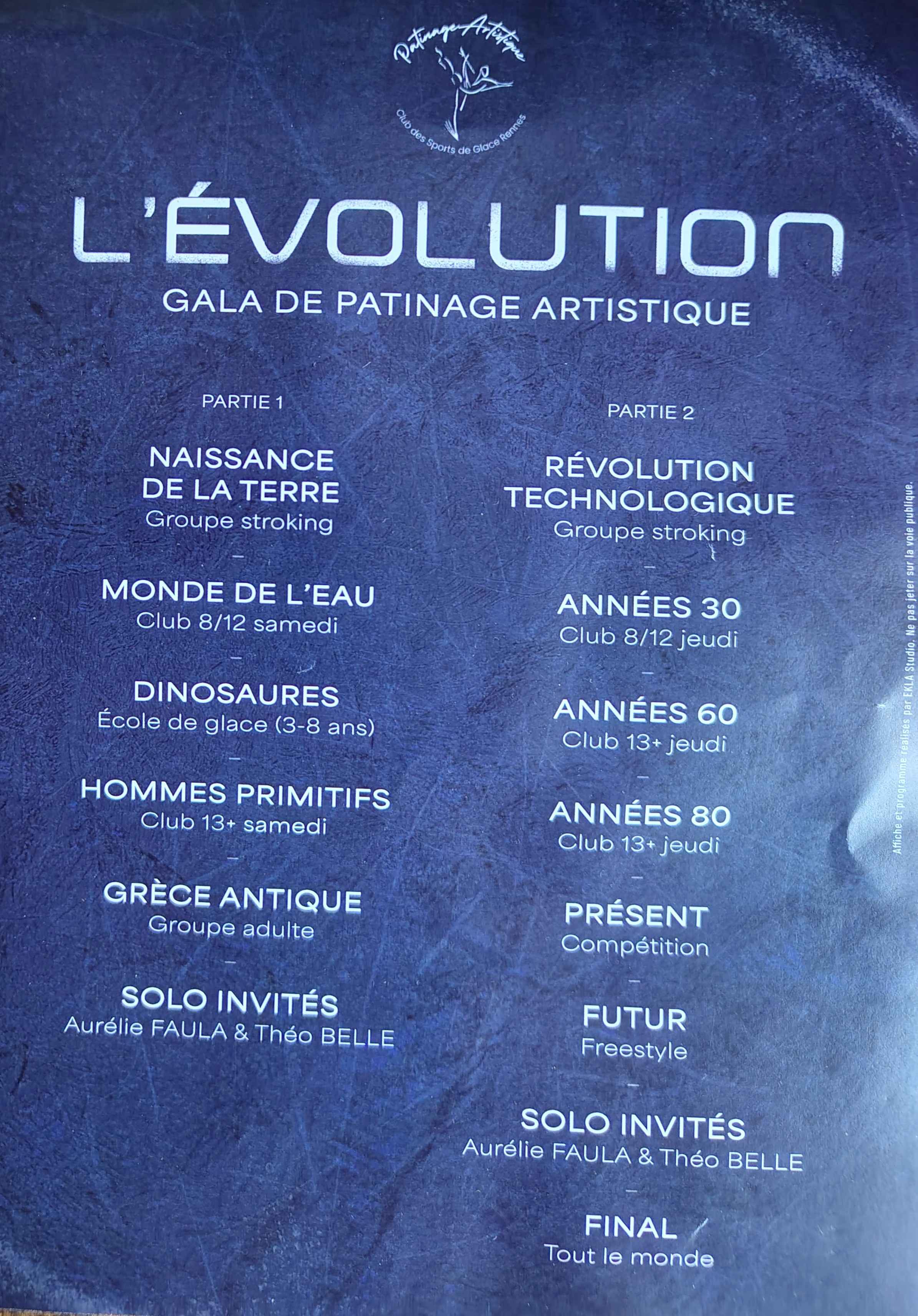
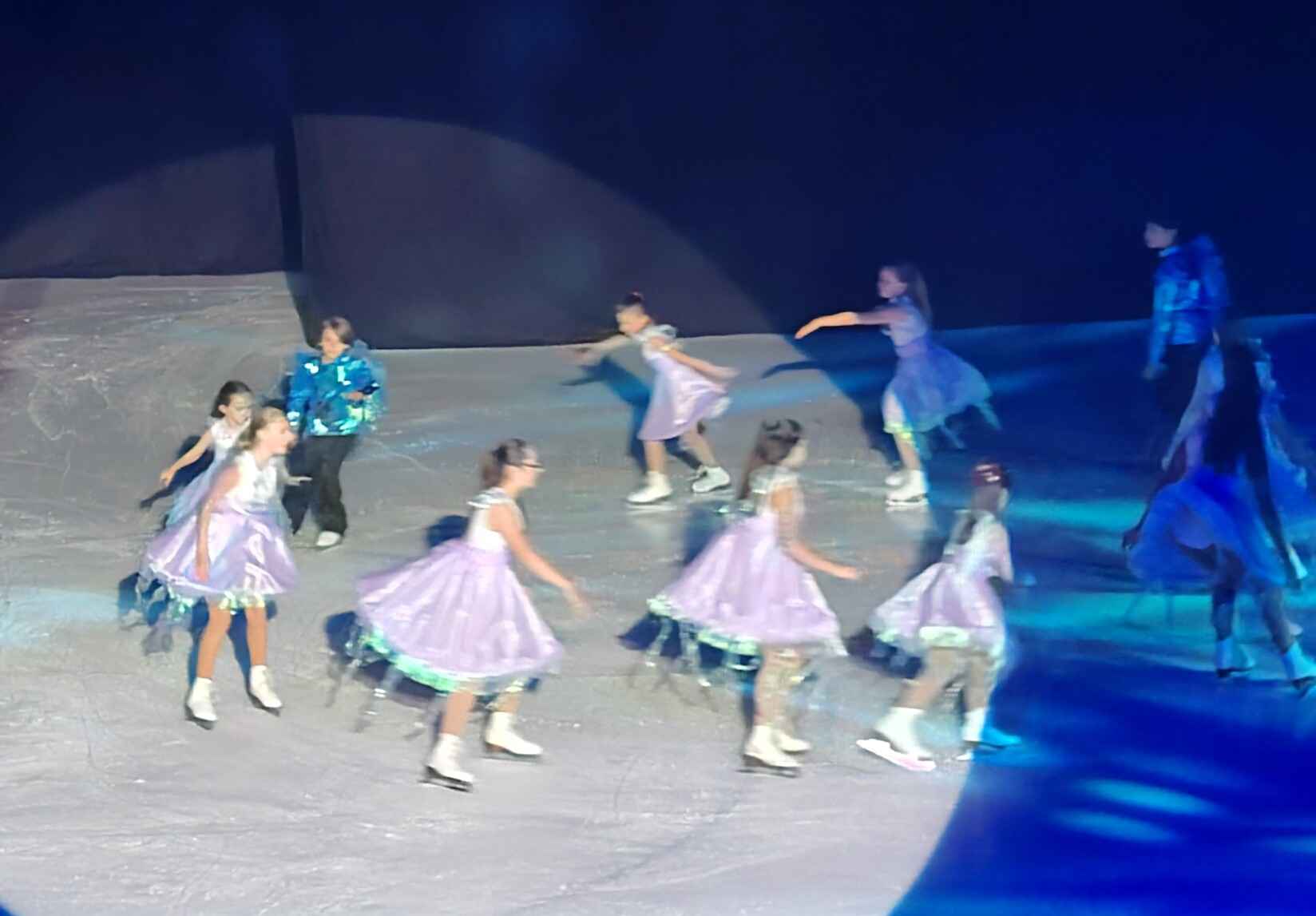
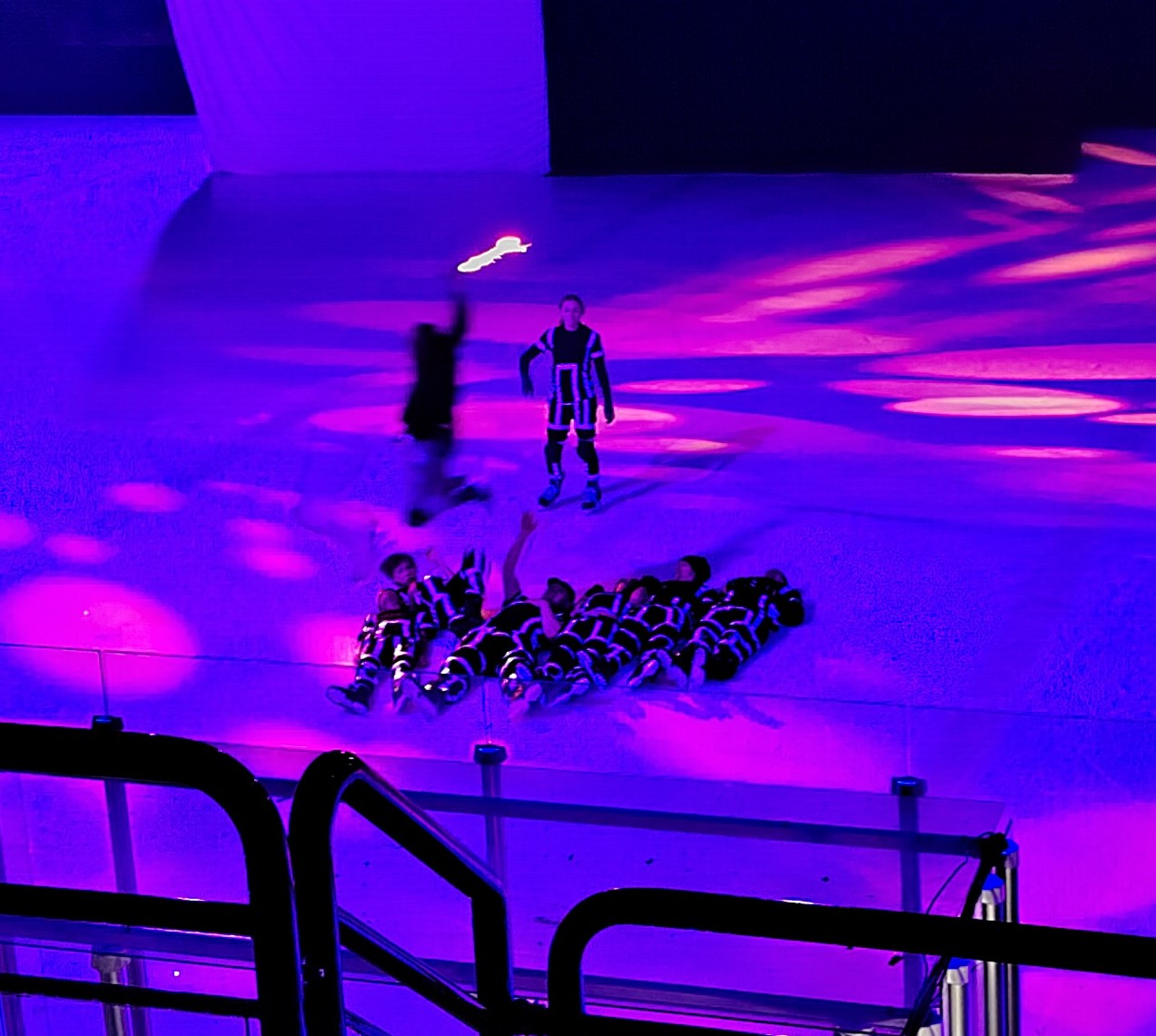
First, it is really artistic, something which I think is largely due to Irina, one of the coaches. There is always a theme—in this case, L’évolution—with 10–12 acts. You can see a picture of the program on the right. The acts range from 3–8-year-olds dressed as dinosaurs to kids who do amazing things, to professionals who are invited to perform, to the crazy people doing freeskating. These freeskaters do things like backflips or jumping—evidently wearing skates—over six of their colleagues who are lying on the ground. Somewhere below, there is a pretty bad picture I took yesterday. These kids and the coaches train a lot. And the freeskaters are crazy.
But what is amazing is the amount of additional work that goes into the gala, all done by engaged parents—not me—and other volunteers. There were people at the door controlling tickets. There were people by the stands helping the 1,200 attendees find their places. There were people selling juice, coffee, and cakes, mostly homemade. There were people shepherding all the kids. There were people in charge of helping kids tie their skates. There were people filming—each year, the whole thing is filmed during the second performance, I guess because it runs better, and the recording is watched over and over and over. There were people in charge of the lighting and the sound. All of it is amateurish because, although he was not there yesterday, in other years, it was a Bolivian cook who was in charge of the lights. There were people who had hung black cloth over the windows to keep the place dark. There were people in the fast-changing station, where kids who participate in two acts that directly follow each other are helped to change from one costume to the next.
And so we come to the crux of the matter: the costumes. Yesterday, they used 500 different costumes. In words: five hundred. During the summer—that is, about a year before the gala—Irina starts thinking about the theme and the acts. She comes up with ideas like L’évolution and that there should be something about dinosaurs, prehistory, antique Greece, the technological revolution, and such. The crazy freeskaters were the future—Dios nos coja confesados. Then, if 60 kids between 3 and 8 are going to perform as dinosaurs, you need to decide on the music and how they are going to be dressed. The first idea is to look online for dinosaur costumes for those kids, but then you have to find 60 of them in the right sizes, and it is also expensive. The evident solution is to make them. And so, a bunch of women spend unbelievable amounts of time thinking about how to make them, cutting them, sewing them, fitting them, and so on. And like this for all 500 dresses. Irina is creative and wants wigs with LED lights, accessories, and such. And all of that, they make. Evidently, those dresses are not made to last—last year, it was Smurfs instead of dinosaurs, and in any case, there would not be space to store them. So, the kids who use the dresses get to keep them. But they are really well done. Here are some examples:
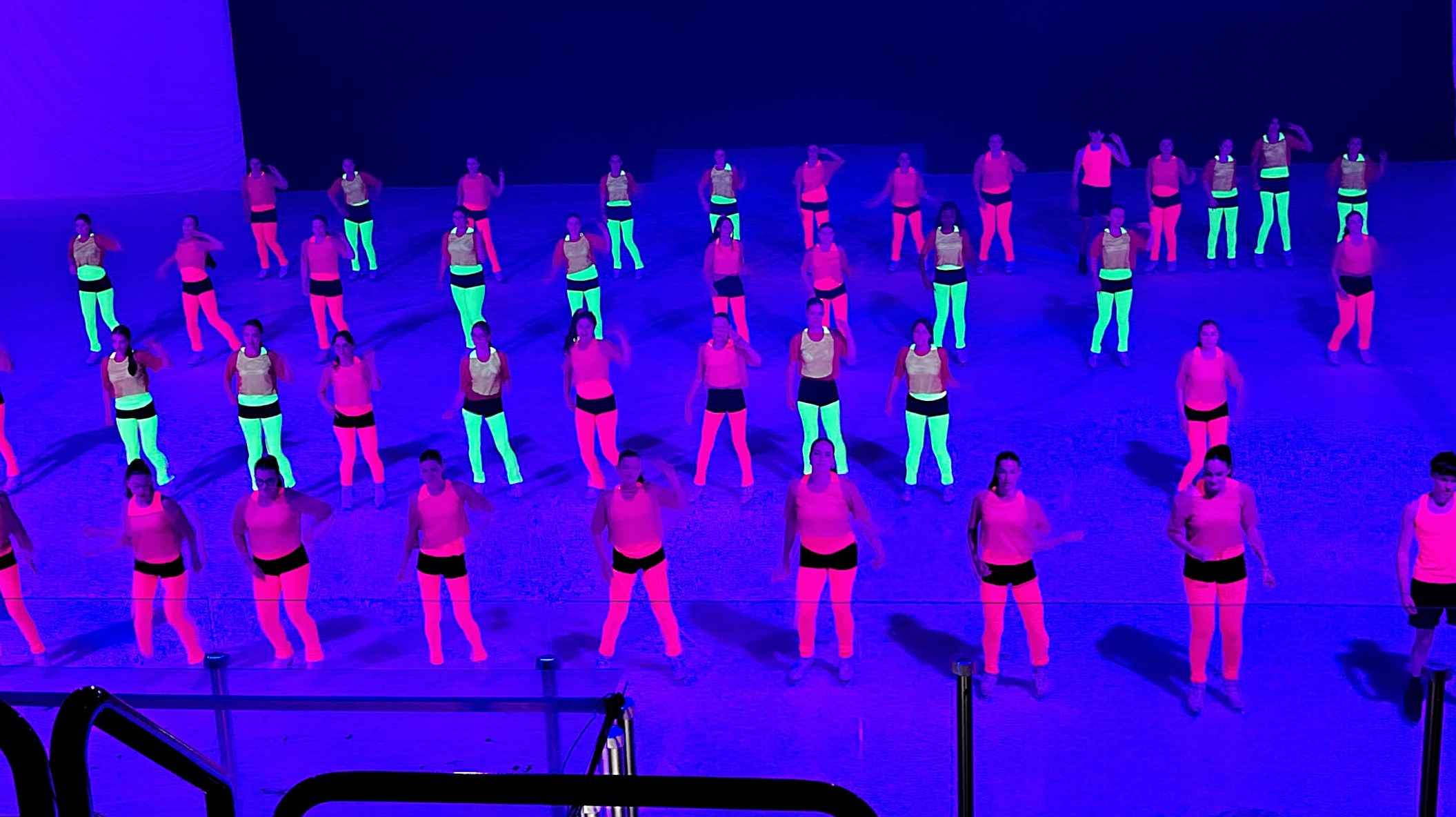
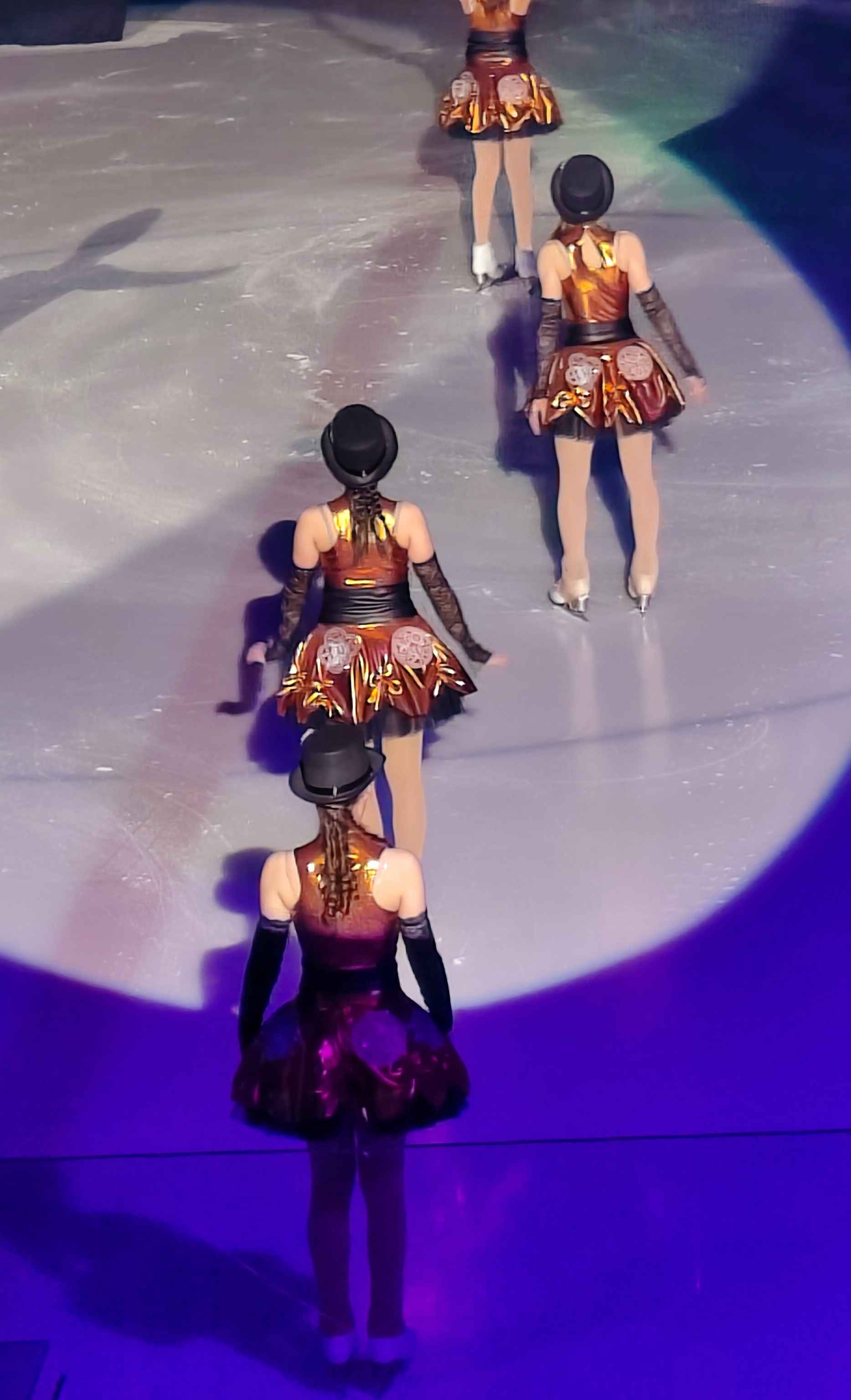
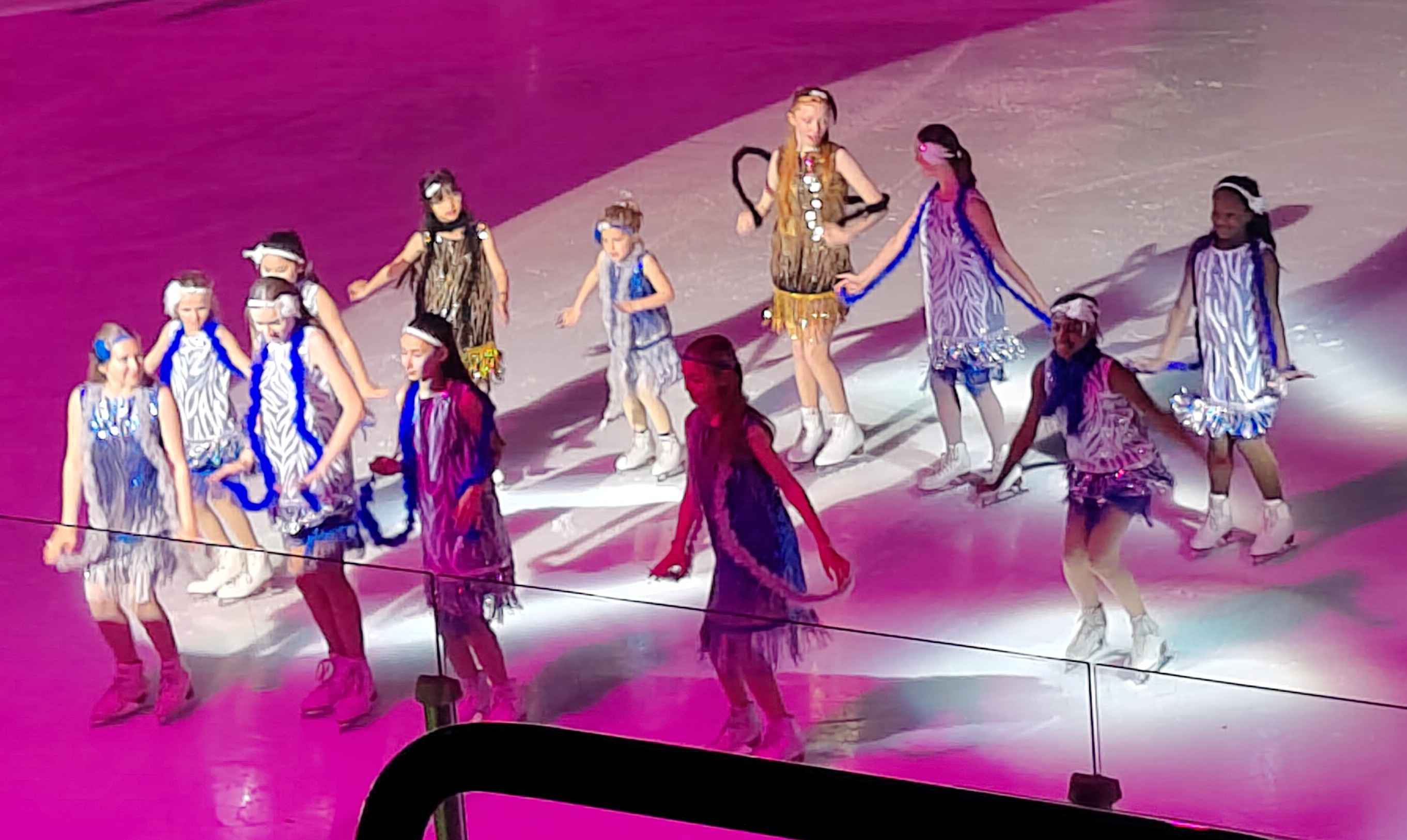
Most of the couturiers are older, retired women who actually know how to make clothes, but there are also freelancers. The cauliflower grower started this year her career serving as a model to present ideas for the dresses to Irina, then got promoted to threading LED lights into wigs, and finally achieved pattern-cutting status. She put an unbelievable number of hours into it. She—and evidently not only she—spent Friday (a holiday here) and Saturday until shortly before the beginning of the gala hanging and labeling all those dresses so that the kids would find them. Just imagine the chaos. Today, she is in the fast-changing station. What she got out of it—besides making it all possible—were two free tickets just next to the VIP section. The only people I recognized in the VIP section were Irina’s parents, who, like her, fled Kharkiv because of the war, and who, unlike her, take care of our cats when we are out of town. I am sure that the cats agree with me that it was good that they got the best seats, a glass of something, and a blanket. For my part, I had a thermos of—not very strong—hot toddy and a bunch of sweaters. Skating rinks are cold places.
Anyways, besides those tickets, she got to know a lot of the other people volunteering, and in the process, some people who had been talked about with names like the bitch—as far as I can tell, Russian is not a language where you show love and appreciation through such names—have turned out to have proper names and to actually be kind of nice.
Something else: Today, at the end of the second and last performance, when all the kids are on the ice, dressed now in their own clothes, the cauliflower grower gets to walk on the red carpet they put on the ice. She receives a flower bouquet and a bunch of applause to thank the couturiers and such for a year of labor.
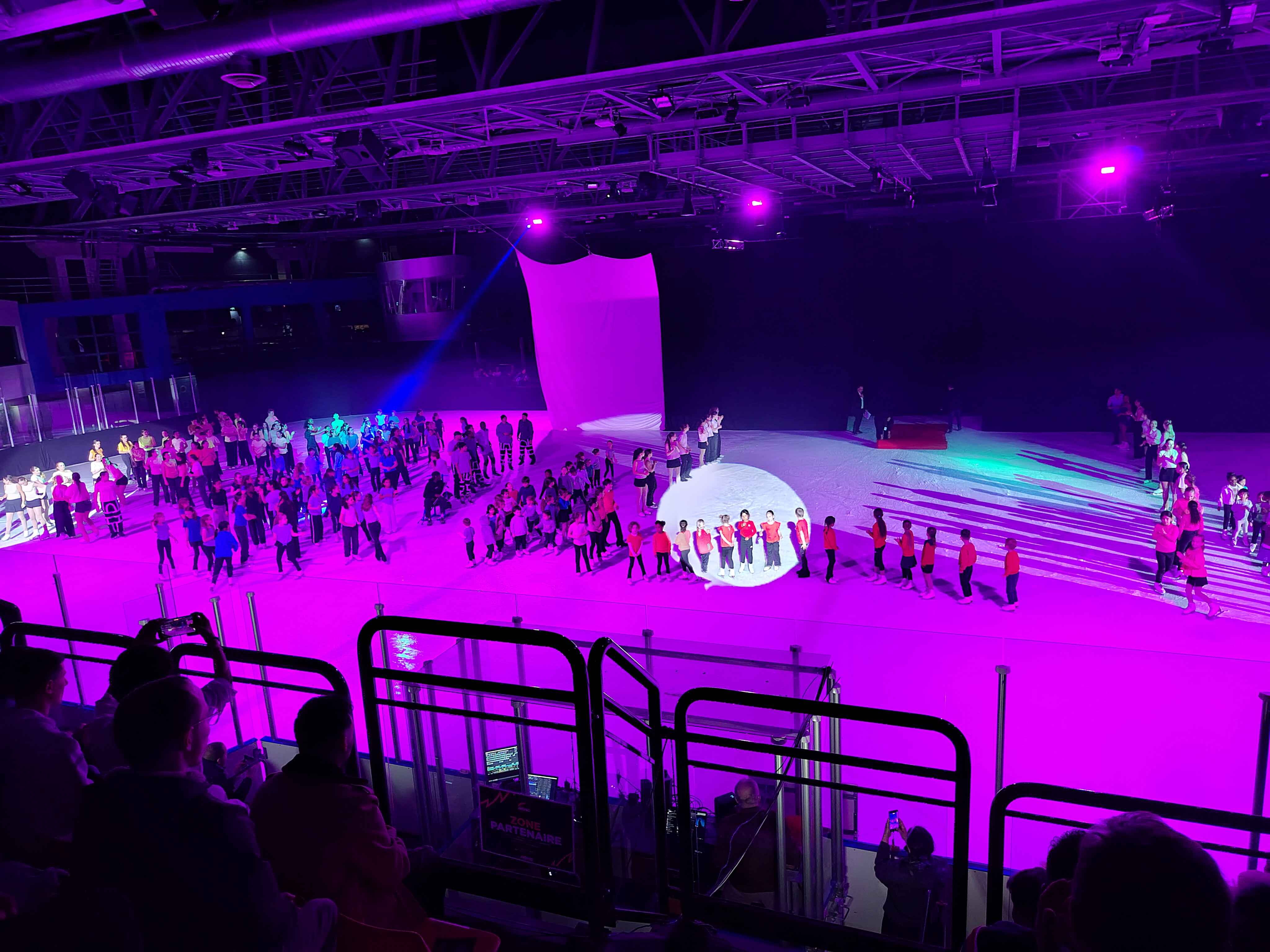
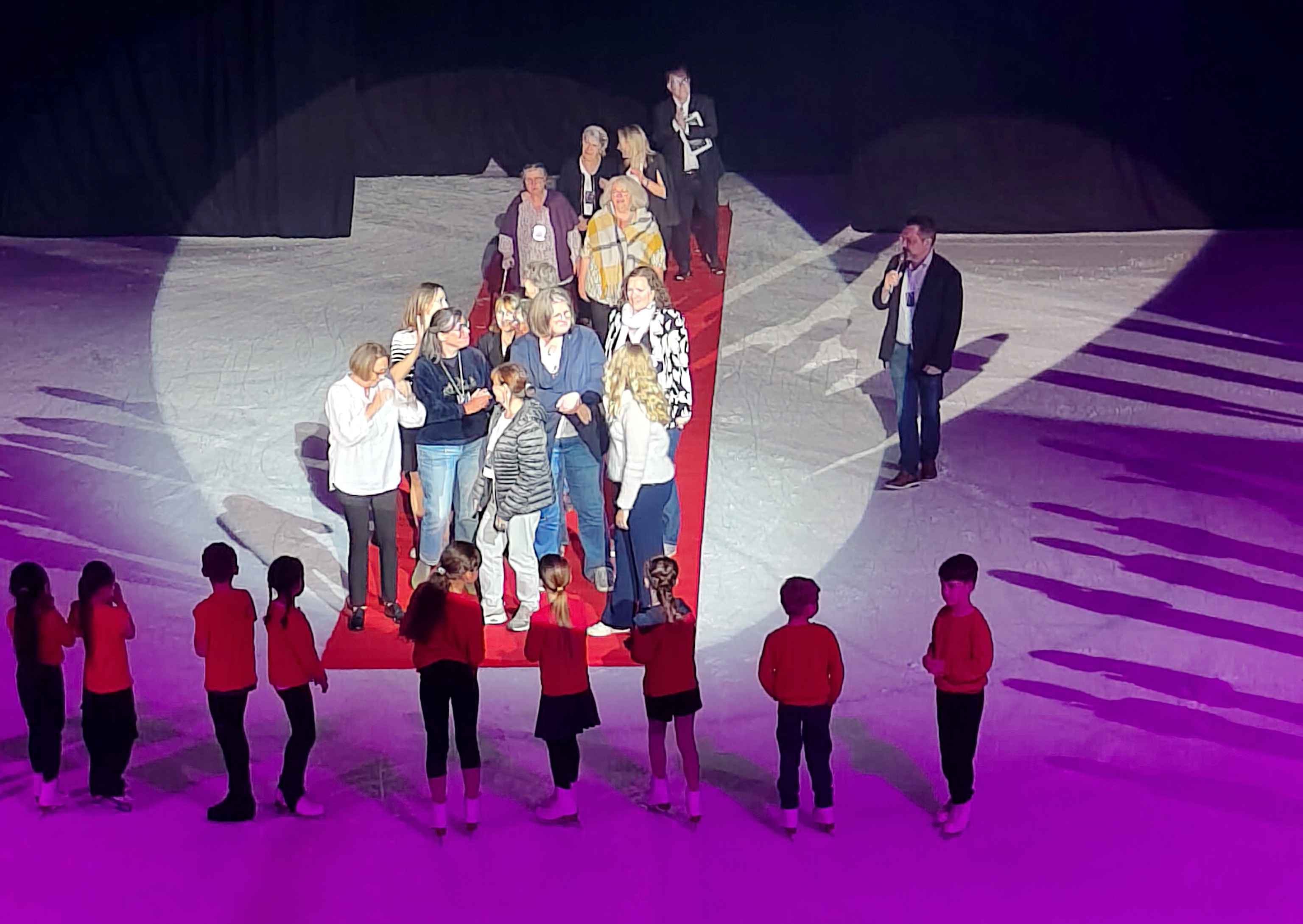
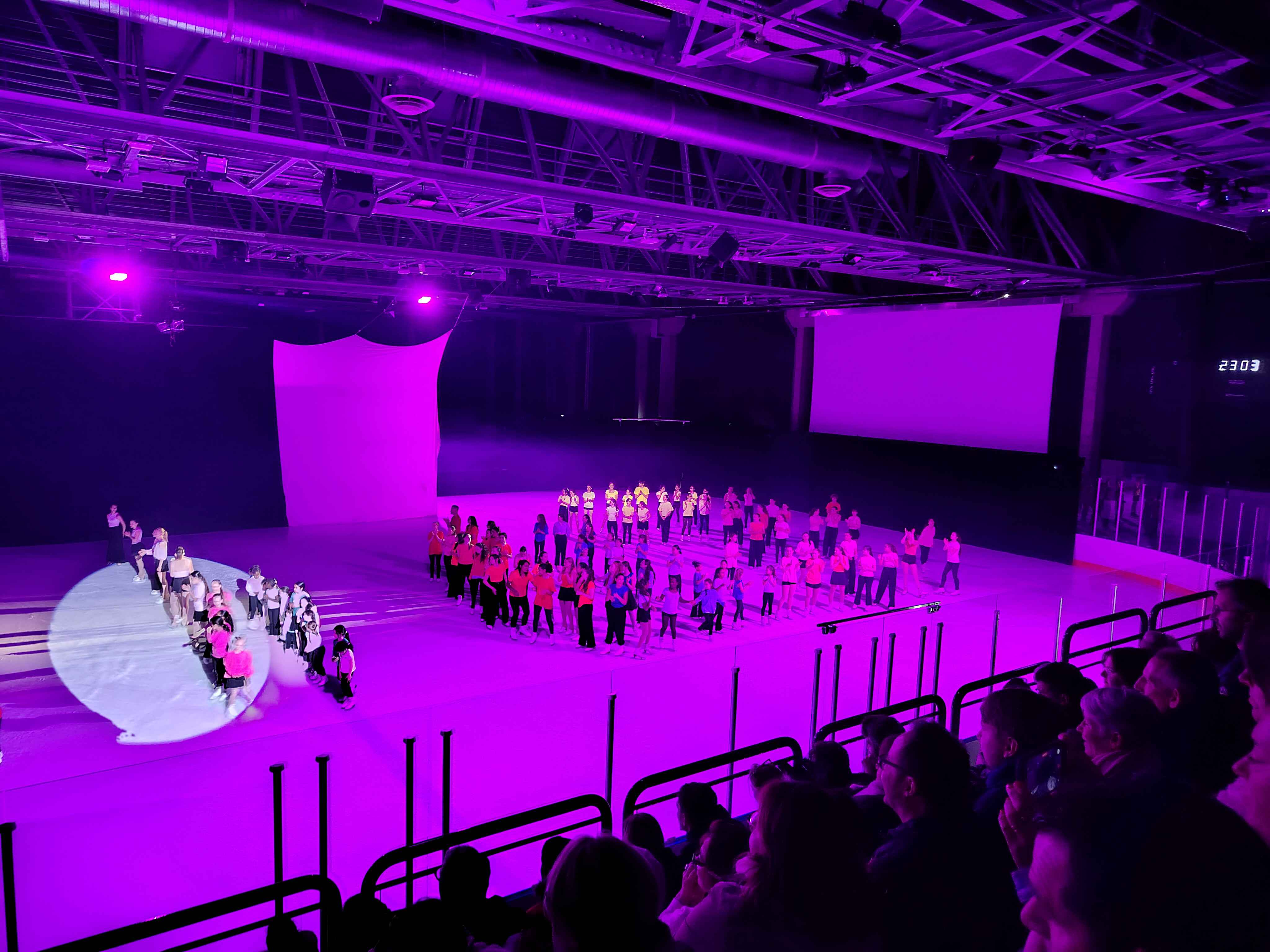
The fact that people are willing to put so much effort into these galas, just because it is a nice thing to do, because it is nice that all those kids get to perform in a really well-done spectacle, all of that really strengthens civil society. I am sure that if Timothy Snyder knew about this, he would agree.